Prella Guide
Lash Training: Your Complete Guide
Good lash training costs $200–2,500 depending on format and depth, and pays itself back in about 8 classic full sets. That's a few weeks of paid bookings for most new lash artists. Bad lash training costs the same and leaves you with retention problems that take months to unlearn.
The difference between the two isn't the price tag. It's what's actually included.
What to look for in a lash training course
Five things separate a program that prepares you to work on real clients from one that sends you home with a certificate and a stock photo:
- Live-model hours. You should complete at least one full set on a real person before the course ends. If a course doesn't include live models at all, you're buying a video library, not training.
- Retention coaching. Retention is the single skill that keeps clients coming back. A serious program covers adhesive chemistry, humidity, isolation technique, and the six or seven common mistakes that cause early fallout.
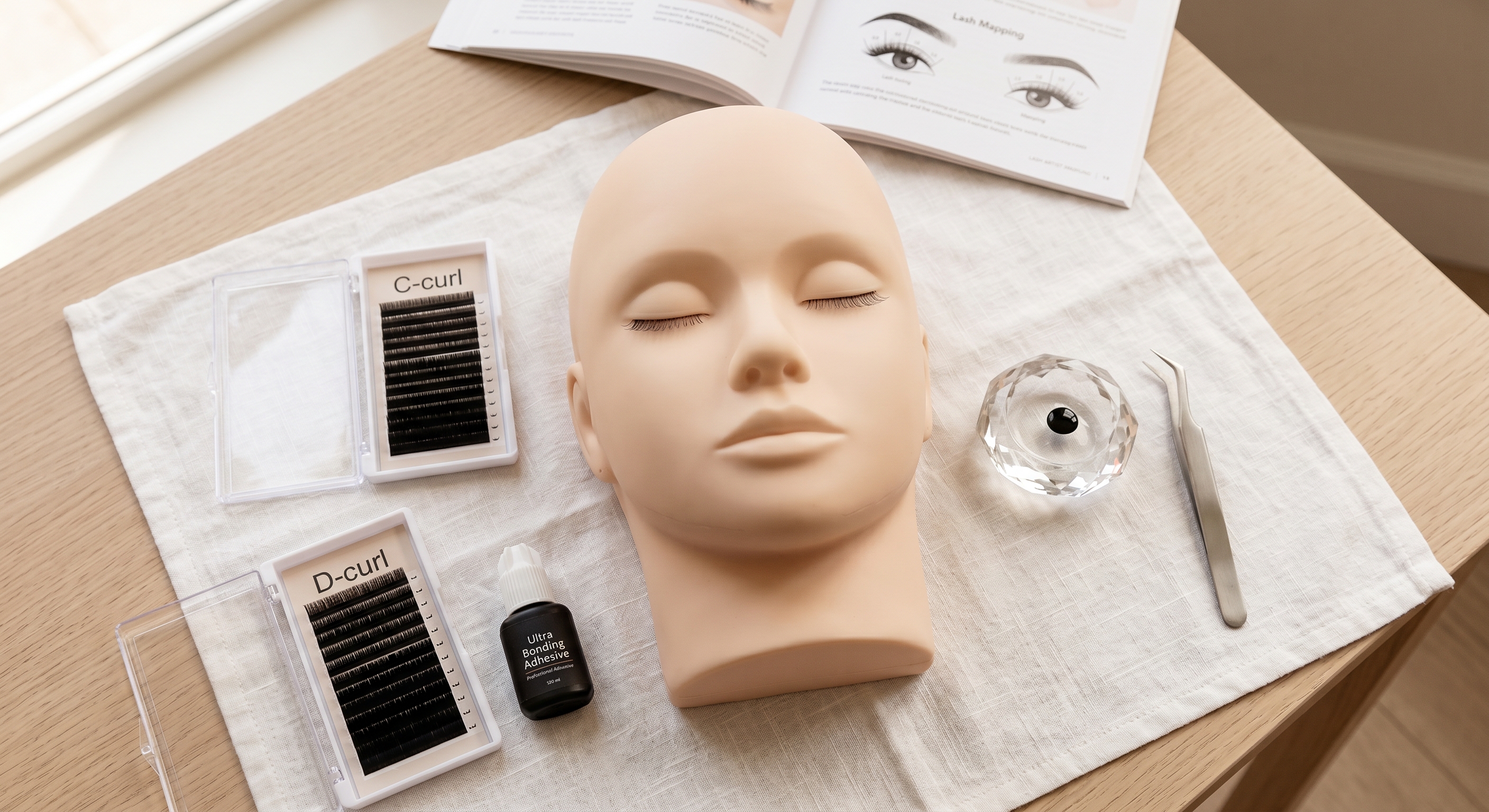
- Kit quality. If the course includes a take-home kit, check what's actually in it. Known-brand adhesive, professional tweezers (not the $5 Amazon ones), and mixed-length C/D trays are a good sign.
- Post-course support. Access to instructor feedback on your first paid clients — via photos or video reviews — is the quiet difference between a good course and a great one.
- State approval. If your state requires board-approved training, the approval numbers will be listed on the program's site. If they're not listed, assume the course isn't approved.
Online lash training
$200–800. Video-based, self-paced, usually includes a take-home kit. Good for learning the theory, seeing step-by-step technique, and studying retention chemistry at your own speed.
Where online training falls short: you can't get real-time feedback on your isolation or your fan-making on a live lash line, and you won't pass any state certification that requires live-model hours. Most new lash artists who only take online training spend the first 30 paid appointments discovering mistakes that an instructor would have caught on day two.
Use online training as a complement to in-person, or as a pre-course study before you show up for a hands-on intensive. Don't use it alone unless your state requires zero certification.
Studio Starter
Skip the research.
A menu priced for your city, a starter kit built around what you already have, and your first three months projected. In three minutes.
Build my lash plan →In-person lash certification
$800–2,500. Two- to five-day intensive with live-model practice and instructor feedback. This is the standard path in states that accept lash-specific certification and the shortest route from "I want to do this" to "I can take paid bookings."
Look for a course that spends at least half its hours on a live model, includes a full-set appointment you complete start to finish, and covers classic and hybrid (not just one). Mega volume is rarely worth including on day one — you'll want separate training once you've done 100+ hybrid or volume sets.
Expect to spend another $150–400 on supplementary supplies the kit didn't include: an extra adhesive (your first one will run out fast), a backup primer, a third tweezer. Budget for this.
Classic vs volume vs hybrid: what to learn first
Classic. Always classic.
Classic is one extension per natural lash. It's the foundation of every other technique, and it's what most clients book when they find a new lash artist on Instagram. Until you can do a clean classic full set in under two hours with isolation accurate enough that retention is clean at the 3-week mark, you have no business charging for volume.
Once you've done 50+ paid classic sets, add hybrid — a mix of classic and small volume fans. This is the bestselling service at most lash studios because it's textured but not overwhelming, and it's a straightforward upgrade from classic for both you and your clients.
Volume — handmade 3D–6D fans — comes third. It's the highest-margin service you can offer, but it requires hundreds of hours of practice. Most lash artists learn volume 6–12 months into running a business, not on day one.
Mega volume (10D+) is a year-two service. Don't stock mega volume trays until you have a waitlist.
After training: applying what you learned
The single most important thing you can do in your first 30 paid appointments is photograph every client before and after. Post the shots, yes, but the bigger reason is retention tracking — if a client comes back at 3 weeks with 40% fallout, the before photo tells you whether the issue was isolation, adhesive, or aftercare.
Keep a retention journal for your first three months. Track: adhesive used, humidity in the room, whether the client washed their lashes, and the retention percentage at fill time. Two or three weeks in, patterns will emerge. This is the skill that separates lash artists who keep clients from lash artists who burn through them.
Build your lash business plan → once you've finished training. Takes three minutes, gives you your menu priced for your city, your complete starter kit, and a projection of your first three months.
Is training worth the investment
A $1,200 in-person certification recovers in about 9 classic full sets at $135 each. Most new lash artists clear their training cost in the first 2–3 weeks of paid bookings.
Compared to cosmetology school ($5,000–20,000) or a degree, lash-specific training is one of the fastest payback investments in the beauty industry.
Related: How to start a lash business · How to become a lash tech · How much do lash techs make
Your lash business, planned in three minutes.
Free, no account, nothing to cancel. Your menu priced for your city, and exactly what to buy next.
Build my lash plan →