Lash Guide
How to Start a Lash Business
Starting a lash business doesn't have to take a year of research. Most new lash artists need the same things — a bed, a magnifying lamp, a starter set of adhesive and tweezers — and the decisions come down to how you set up your space and what you charge. This guide walks you through every step, and at the end you'll have a personalized plan based on your city.
Free. 3 minutes. No signup until the end. Your menu, shopping list, and earning projection — priced for your city.
What you actually need to start
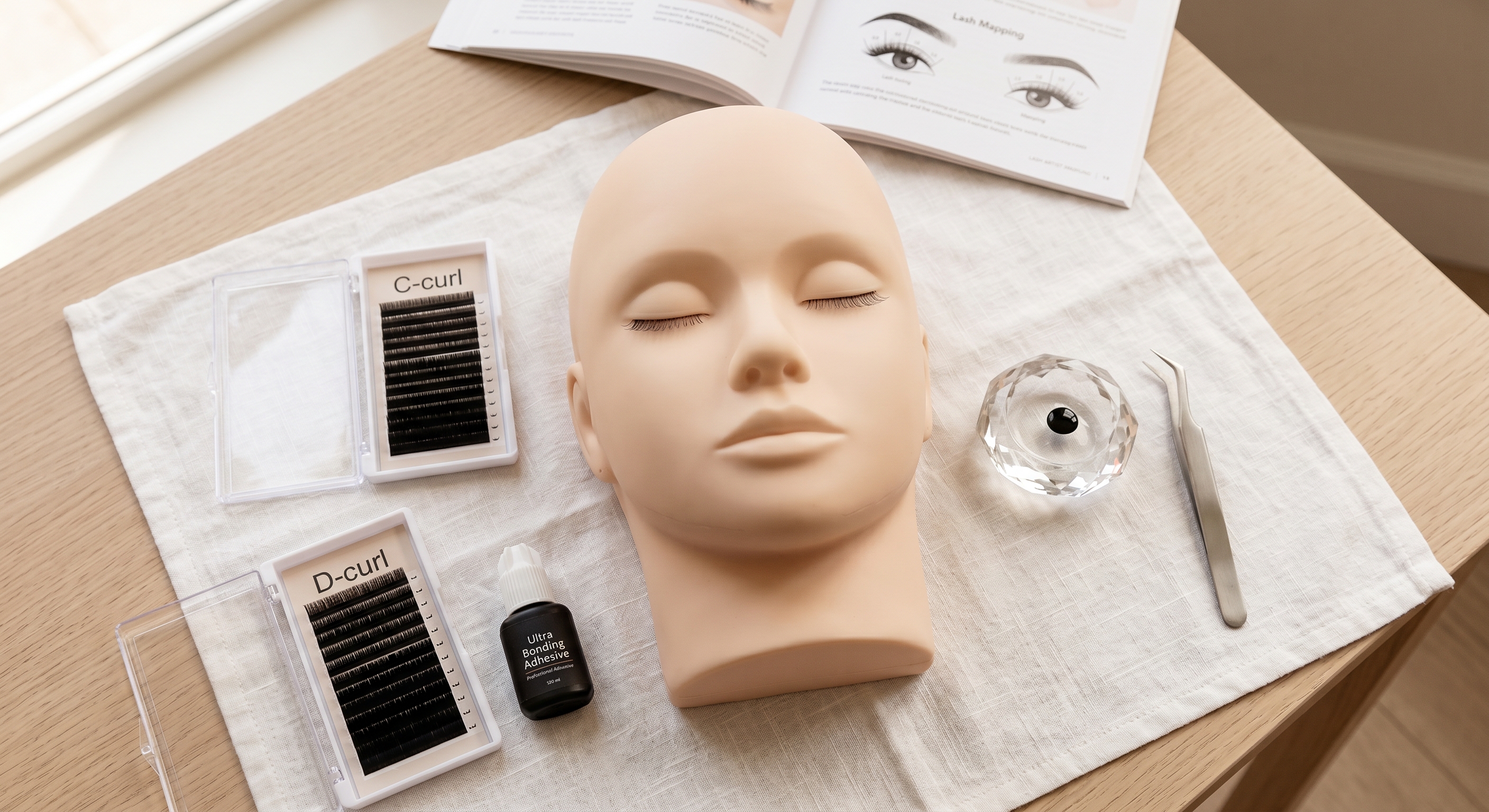
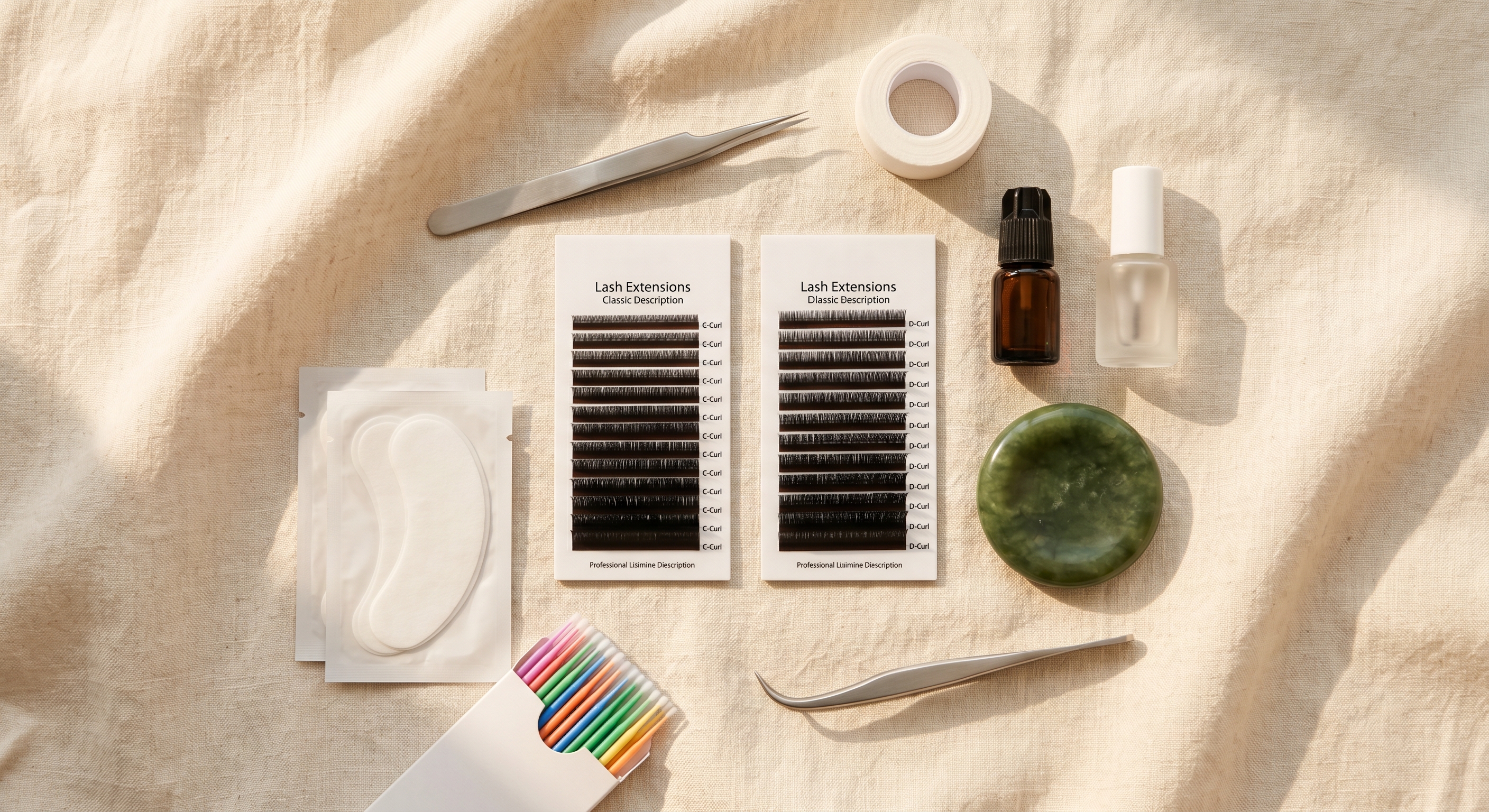
Every new lash artist needs the same starter kit: a lash bed, a magnifying lamp with ring light, a rolling stool, quality isolation and pickup tweezers, professional adhesive matched to your skill level, a primer to strip oil from natural lashes, classic trays in C and D curls, under-eye gel pads, micro brushes, and face cradle covers.
If you're offering volume, add a volume fan tweezer and a tray of 0.07mm lashes. If you're offering lifts and tints, add a lash lift kit and a tint kit. That's it. Everything else — a nano mister, an air purifier, a practice mannequin — is a month-two purchase.
Budget $450–750 for a complete starter kit, less if you're in a suite rental that provides the bed and lamp. Build your personalized list →
How much lash artists actually make
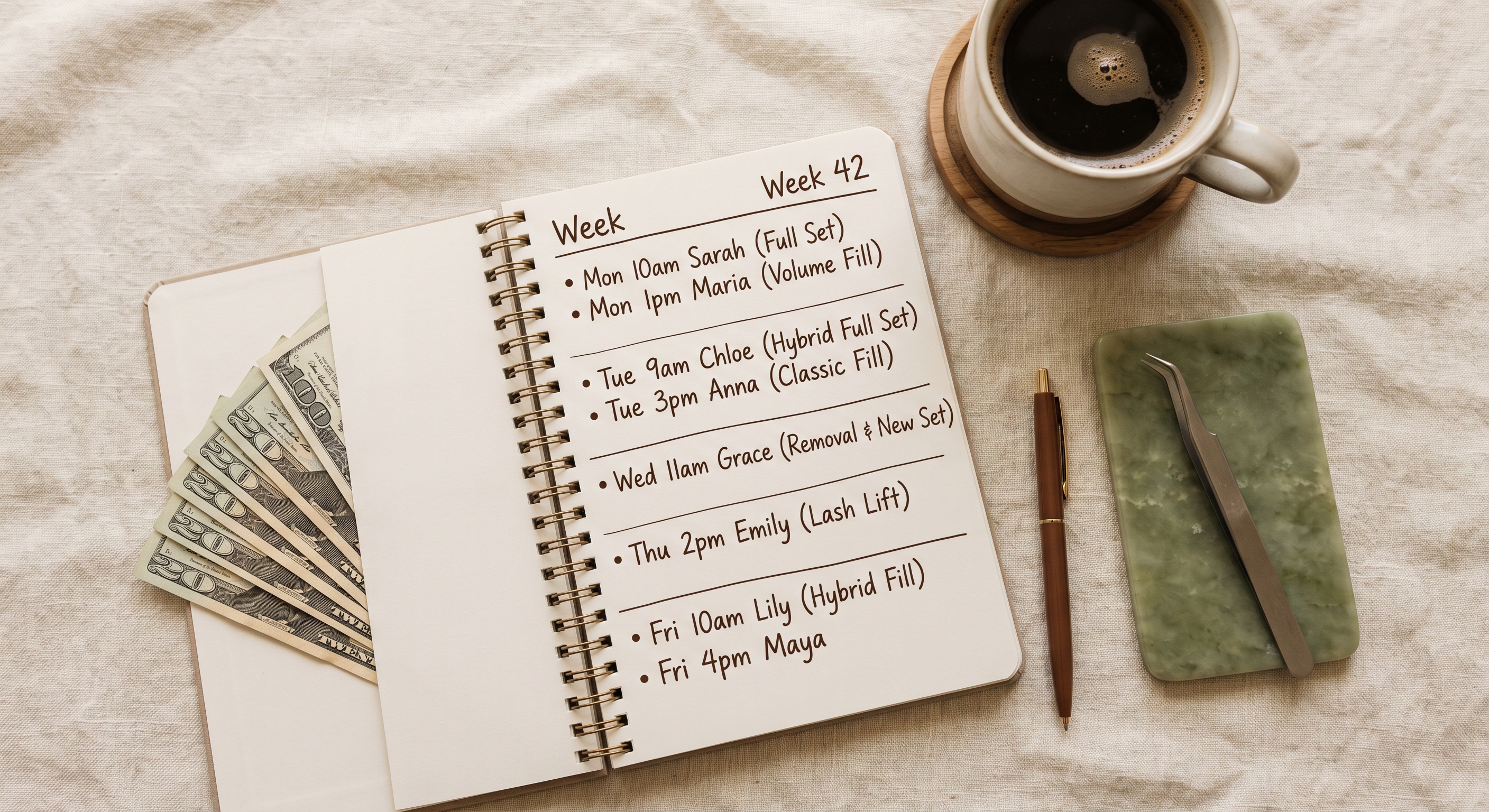
At 3 classic full sets a week at $135 each, you're bringing in $1,620/month. At 5 clients a week mixing classic and hybrid at $165 average, you're at $3,300/month. Full-time lash artists doing mostly volume at 8–10 clients a week clear $6,000–8,500/month, more in high-cost-of-living cities like New York, San Francisco, or Los Angeles.
Add-ons move the number faster than more clients do. A lash tint at $30 on top of a classic set is a 22% revenue lift for ten extra minutes of work. Bottom lashes at $35 is another 26% on the same appointment. A booked lash artist running one add-on per appointment is earning 25–35% more than one who doesn't.
Location matters too. A classic full set is $125 in Dallas, $155 in Miami, $200 in Manhattan. See the full city-by-city breakdown →
Where will you work
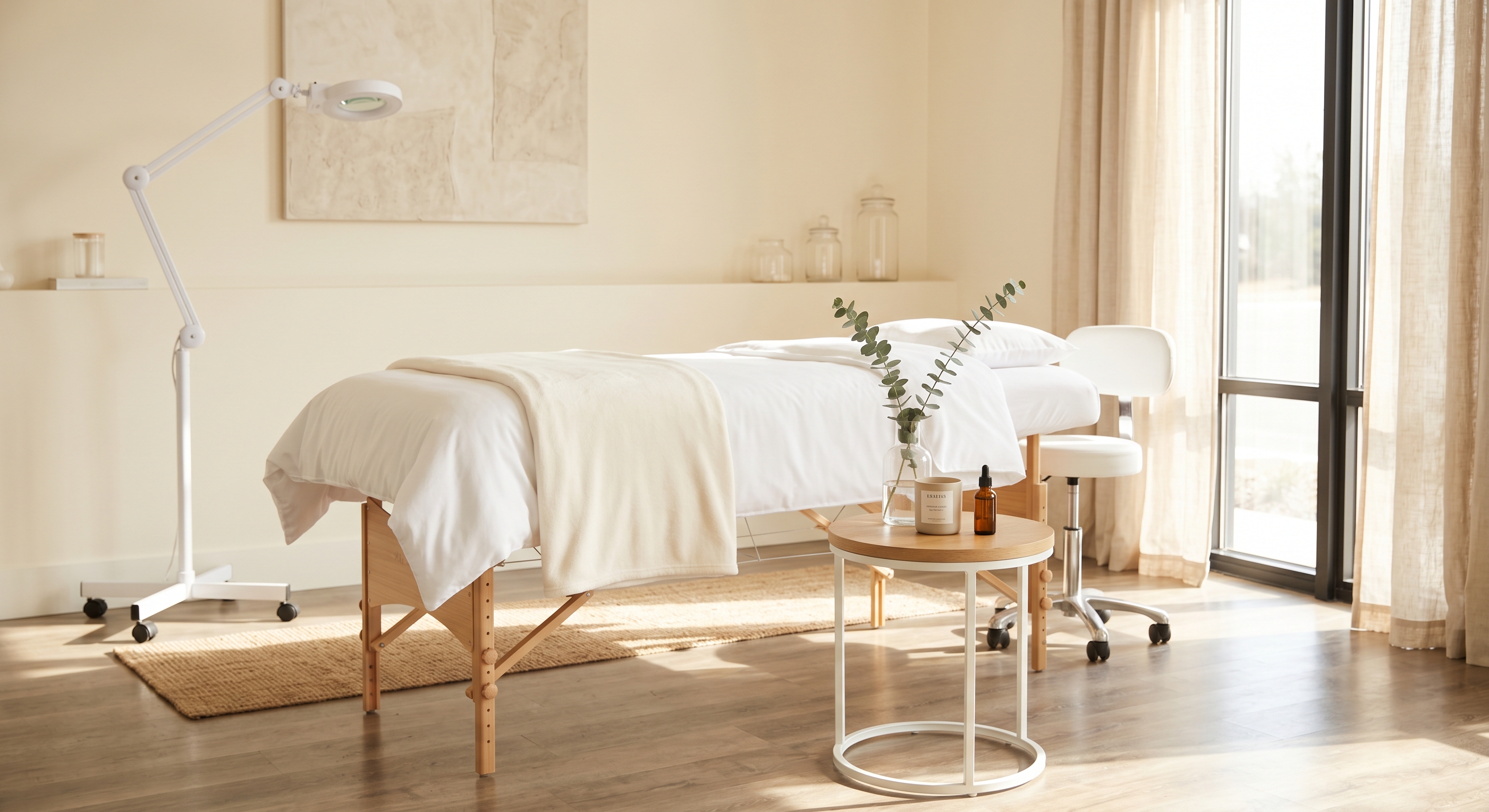
Suite rental — a private room inside a salon suite building. Runs $200–800/month depending on your city. Bed, lamp, and stool are usually included. You set your own hours, prices, and brand. No commission taken. For most new lash artists, this is the cleanest start.
Booth rental inside an existing salon — $100–400/month. Cheaper than a suite, but you're sharing a space and you may have less control over your environment. Works well if the salon already has foot traffic you can tap.
Home studio — zero rent, but you'll need a home occupation permit and a dedicated, separately accessible room in most states. Your overhead is the lowest of any option. The tradeoffs are zoning compliance and client comfort with your home address.
Mobile — you go to the client. Lowest startup cost, but your time-per-client is higher because of travel. Works well for wedding and event lashes.
What to charge
Set your prices at market rate before you open. Not "what the salon down the street charges" — what the market in your area supports for a solo lash artist in a professional setting.
National averages: Classic Full Set $125–155, Hybrid $155–185, Volume $185–225, Mega Volume $225–275, Lash Lift $85–105, Lash Lift + Tint $115–135. Fills at 50–60% of the full-set price for 2-week, 70–80% for 3-week, and near-full-set for 4-week — because at that point you're rebuilding density.
In a high-cost market like NYC, LA, or SF, add 25–50%. In a lower-cost market like San Antonio or Detroit, subtract 10–15%. The Studio Starter tool calculates your exact city's numbers.
Personalized to your zip code in about 3 minutes.
Licensing and legal basics
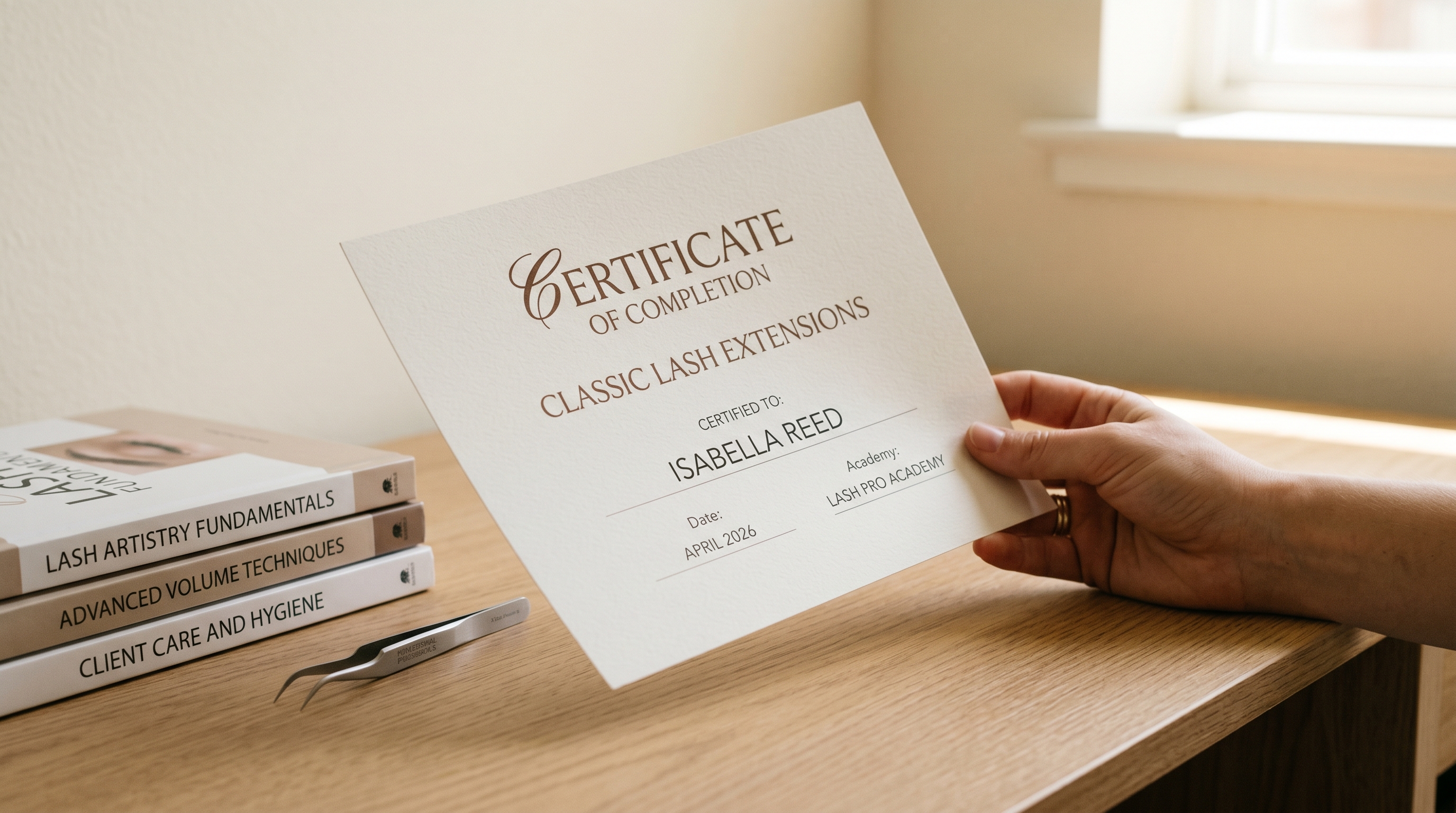
State licensing varies. Most states require either a cosmetology or esthetics license, or a lash-specific certification from a board-approved program. A few states — Connecticut and Florida among them — don't require a state license, though most cities still require a business license. Check your state board before you order equipment.
Liability insurance is not optional. It runs $200–400/year for solo lash artists and it protects you if a client has a reaction to adhesive, a pad slips, or an extension injures an eye. The industry standards are Associated Skin Care Professionals (ASCP) and Professional Beauty Association (PBA). Full licensing guide →
How to get your first ten clients
Text ten people individually in your first week open. Not a group message, not an Instagram post — individual texts to friends, family, former co-workers, neighbors. "I just opened my own lash studio and I'm taking my first paid bookings. I'd love to lash you." Offer a model rate ($20–30 off) in exchange for photos and a review. Five of the ten book. Probably six.
Instagram is where lash clients find you. Post before-and-afters, close-ups of your work, and a stories highlight with your menu and pricing. Location-tag every post. Use 10–15 neighborhood-specific hashtags, not the generic #lashextensions ones.
Set up a free Google Business profile the day you open. It puts you on the map for "lash extensions near me" searches and it's the single highest-converting listing for local beauty services. Ask every happy client for a Google review in exchange for $10 off their fill.
Your personalized starter plan
The Studio Starter tool asks you three things: what services you want to offer, what equipment you already have, and where you're based. Three minutes later, you'll have your menu priced for your city, a shopping list built around what you already own, and a projection of your first three months of income at 3 clients a week.
3 minutes. No credit card. Your menu, your prices, your shopping list — all personalized.
Questions lash artists ask before they open
How much does it cost to start a lash business?
A working starter kit — bed, magnifying lamp, tweezers, adhesive, primer, trays, under-eye pads, and linens — runs $450–750. If you're in a suite rental, the bed and lamp are usually provided, which drops your number closer to $250–400.
How much do lash artists make per month?
At 3 classic full sets a week in a mid-cost market, $1,620/mo. At 5 clients a week mixing classic and hybrid at $165 average, $3,300/mo. Full-time lash artists doing mostly volume at 8–10 clients a week clear $6,000–8,500/mo, more in high-cost-of-living cities.
Do I need a license to be a lash tech?
It varies by state. Most require either a cosmetology or esthetics license, or a lash-specific certification. A few states require no license. Check your state board before you order equipment, and carry liability insurance ($200–400/year) regardless.
How long does it take to start a lash business?
From the day you finish training to your first paying client is usually 2–4 weeks. Week one: certify, get insurance, order equipment. Week two: set up, practice on friends. Week three: take paid bookings.
Should I start with classic or volume lashes?
Classic. It's the foundation. Hand-fanning volume requires hundreds of hours of practice, and most clients ask for classic or hybrid anyway. Once you've done 50+ classic sets, add hybrid, then volume.
Can I run a lash business from home?
In most states, yes, with a home occupation permit and a separately accessible room. Home studios have the lowest overhead. The tradeoff is zoning rules, client comfort with a home address, and professional presentation.
What's the best location to start — home, suite, or booth?
Suite rentals ($200–800/mo) are the cleanest start: private room, usually furnished, you keep all your revenue. Booth rentals ($100–400/mo) are cheaper but you share a space. Home studios are zero rent but require permits. Mobile works if you have a car and clients willing to host.